
“I want to eat at those wooden chairs,” our son said. “It looks inviting,” I agreed.
At 20, he was always looking forward to his next meal. It had been his idea to meet in Italy for a week. He had planned our destinations, gotten leave, and flown in from his European navy base. I’d traveled around the globe when I was single, but my last trip to Europe had been with the three of us when he was a baby.
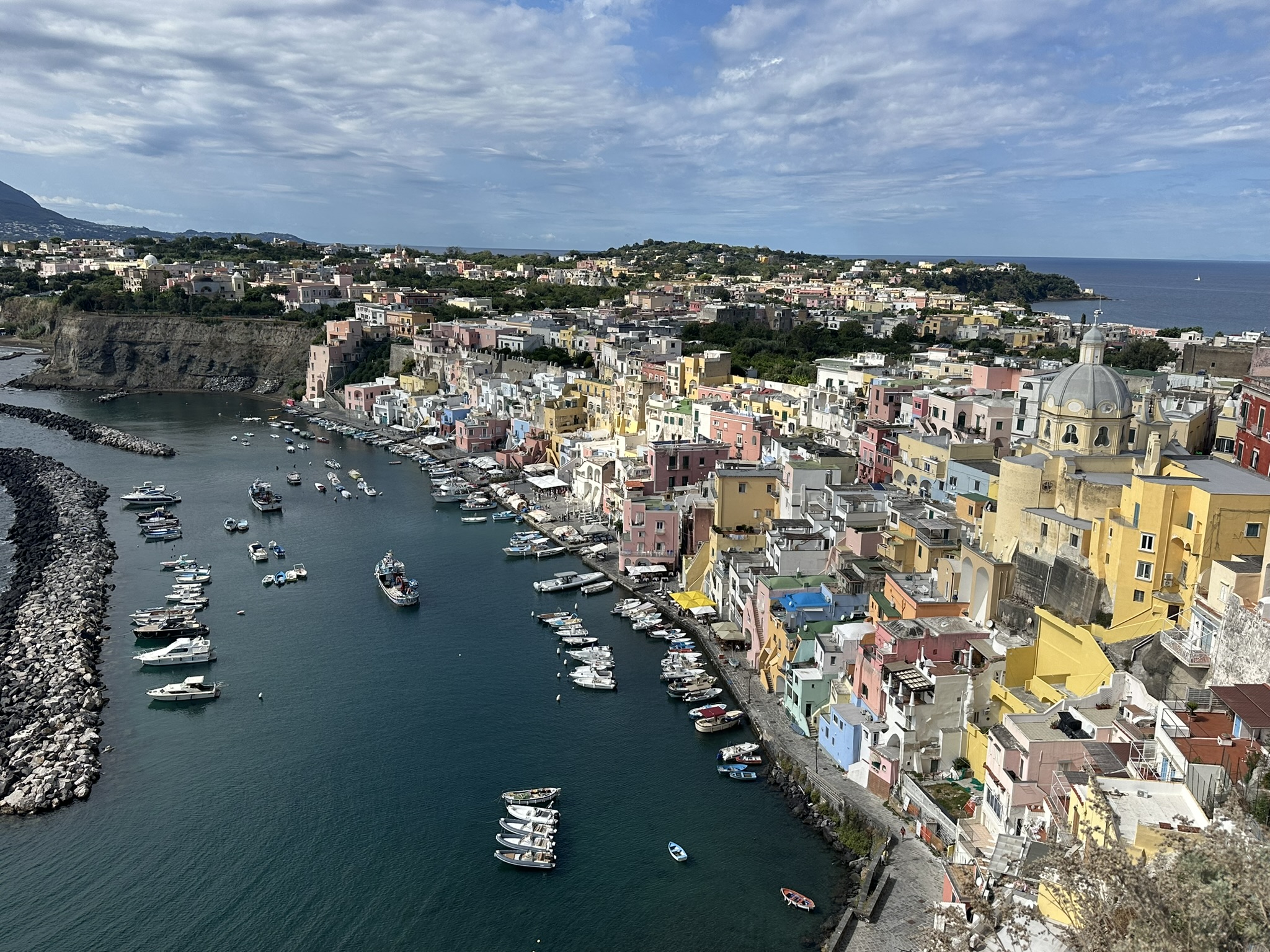
After arriving by ferry, we had spent the morning strolling around the island of Procida, taking pictures of the protected harbor in a round bay filled with unpretentious boats. I had been looking forward to reaching the water since we’d first seen it.
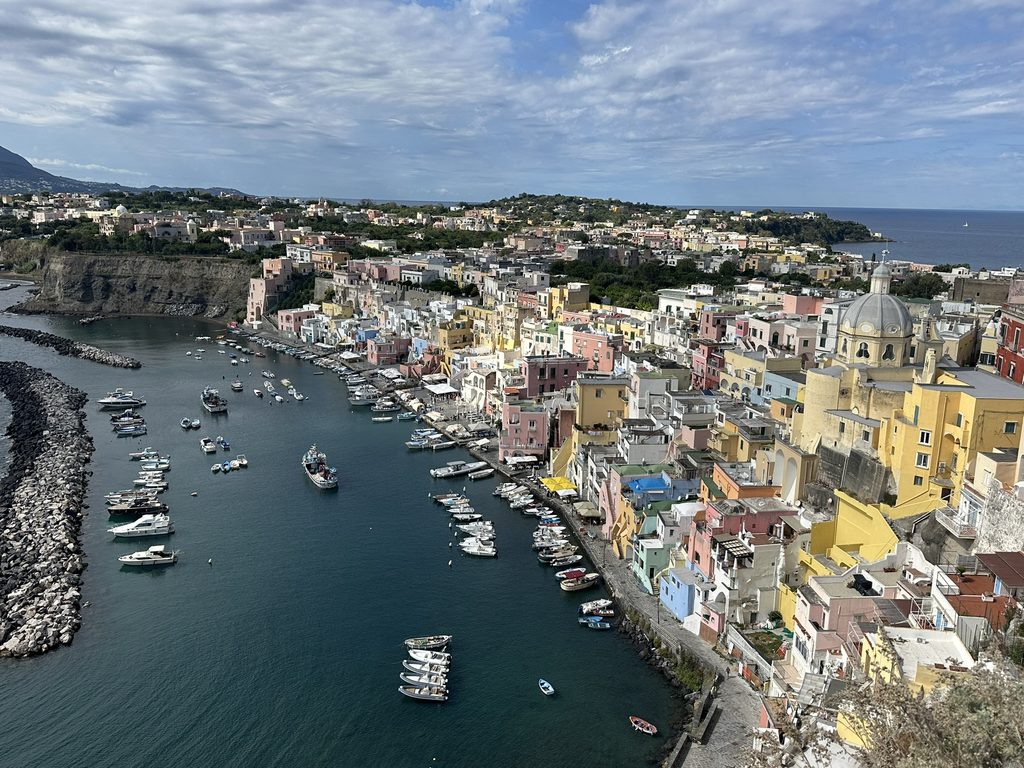
From atop the hill, the warm wooden furniture on the waterfront beckoned to us. Shaded under tan canvas awnings, it stood out among a sea of metal-and-plastic cafés. I hoped the menu would match the scene.
The narrow walkway came down between small houses perched on the cliff – the steps built into the walls, bringing us right next to people’s windows and front doors. There was only room for one person at a time.
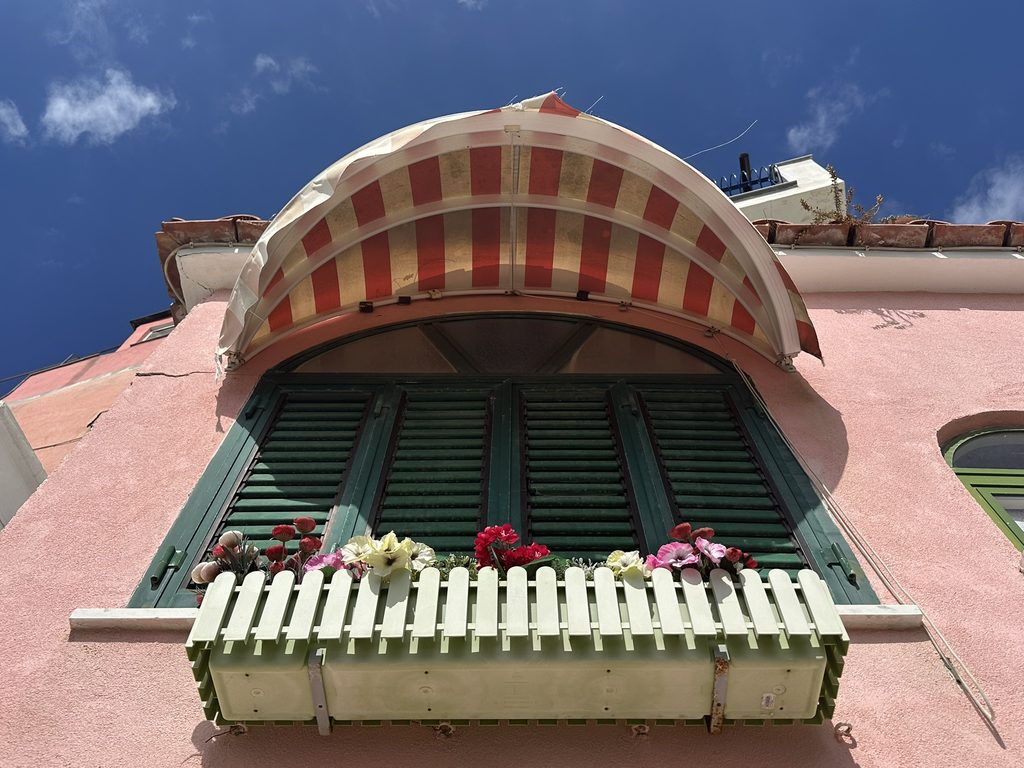
We followed a tour group down through the top part of the path. Whenever we turned a corner, there was a pause and we could hear people ahead of us gasping and taking more pictures.
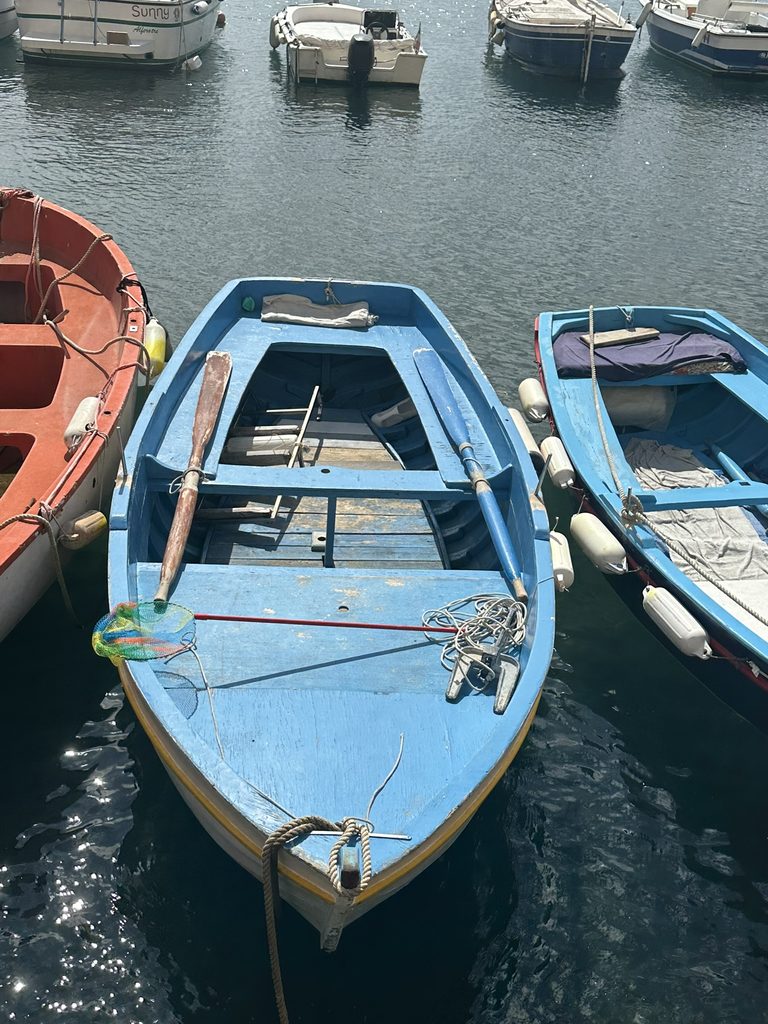
When we returned to sea level, we walked past small boats tied along the stone wharf on our left, with shops on our right. In some places, the tables and chairs extended toward the water, creating a path edged by the boats’ bow lines. It was narrow, but we never needed to step aside. We paused at different boats without people bumping into us. There were no annoying gulls like the ones that had attacked us in Amalfi. The air was gently briny, lacking the expected smells of gasoline, fish, or frying oil.
We reached the café with the wooden chairs. There weren’t that many tables left. We had talked earlier about walking past it to check out other cafés first. I looked at my husband and he nodded. Our son ushered me forward with his hand. I chose a wooden table in the shade, set with woven rattan placemats. It felt delightfully polished.
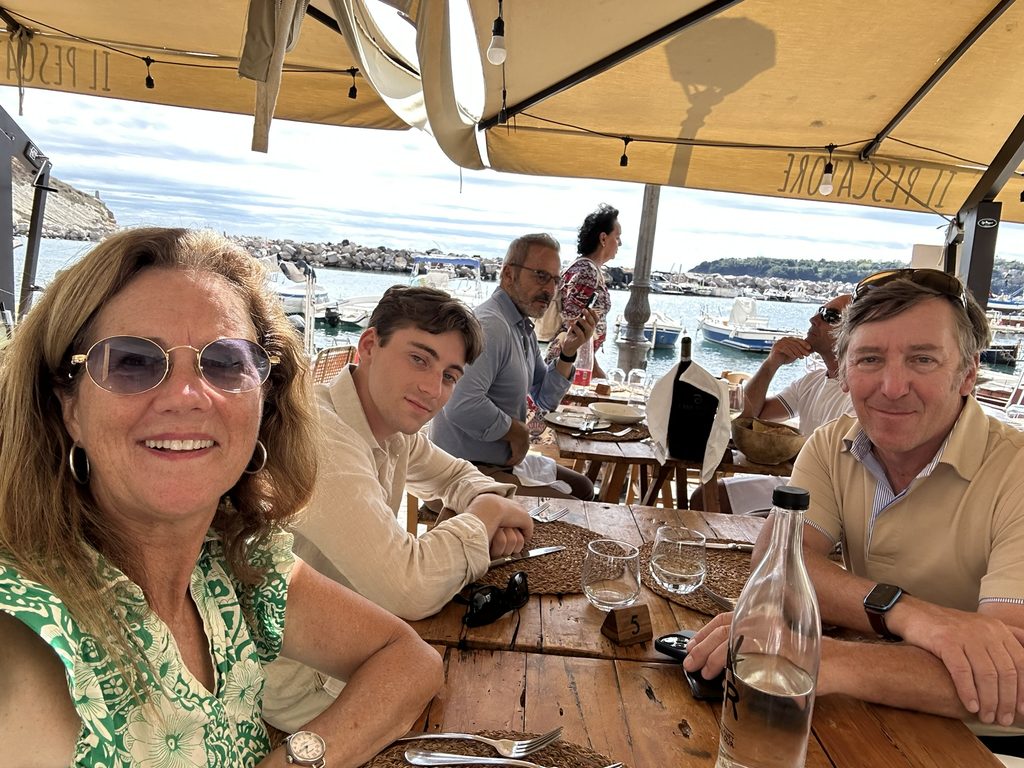
As we sat down in the unexpectedly stretchy cane seats, we were greeted by a bundle of energy in white linen. She didn’t speak English, and I don’t speak Italian, but I somehow understood what she was saying. She smiled and gestured, directing her energy and words only to me, as if she knew my husband and son were not following along. I smiled and nodded.
I gathered that food critics had called her to say her food was the best, after touring all the islands. The ingredients were from the island or the sea right next to us.
Her obvious passion for the whole experience encouraged me to close the menu and simply follow her lead. (A chef friend had told me years ago to always get the special.) I explained to my husband and son what I thought she was recommending we have, and they agreed.
The woman, whom we later learned was Signora Celeste, brought us a seafood antipasto of lightly battered and fried calamari and anchovies, along with her lemon salad. A subtle scent of citrus rose from the table.
The lemon wasn’t as sour as expected and was delicate on my tongue, the acid mixing with the olive oil in my mouth. The seafood was crispy and surprisingly featherweight, with a touch of salt as I bit into it. We all sopped up the salad dressing with the fresh bread she’d put on the table.
Our son put his fork down and closed his eyes. “This is amazing.”
And it was.
My husband and I put our forks down. I took a deep breath, took in “my men” as I called them, and looked around. There were brightly painted wood dories and dinghies bobbing in the sparkling water, against a backdrop of pastel-colored houses, shops, and churches propped on the hillside.
I wasn’t so confident about the next course – whole fish weren’t usually my favorite. But I didn’t worry – I’d had enough to survive the afternoon if I needed it.
And then Celeste arrived with the fish. She put it on the table right next to me and artfully began to debone it. My husband took a picture.
“You are a professional,” I said to her.
“I’m easy,” she said.
“You must be very popular with the men,” I replied.
She and I both laughed loudly, and my husband and son joined in.
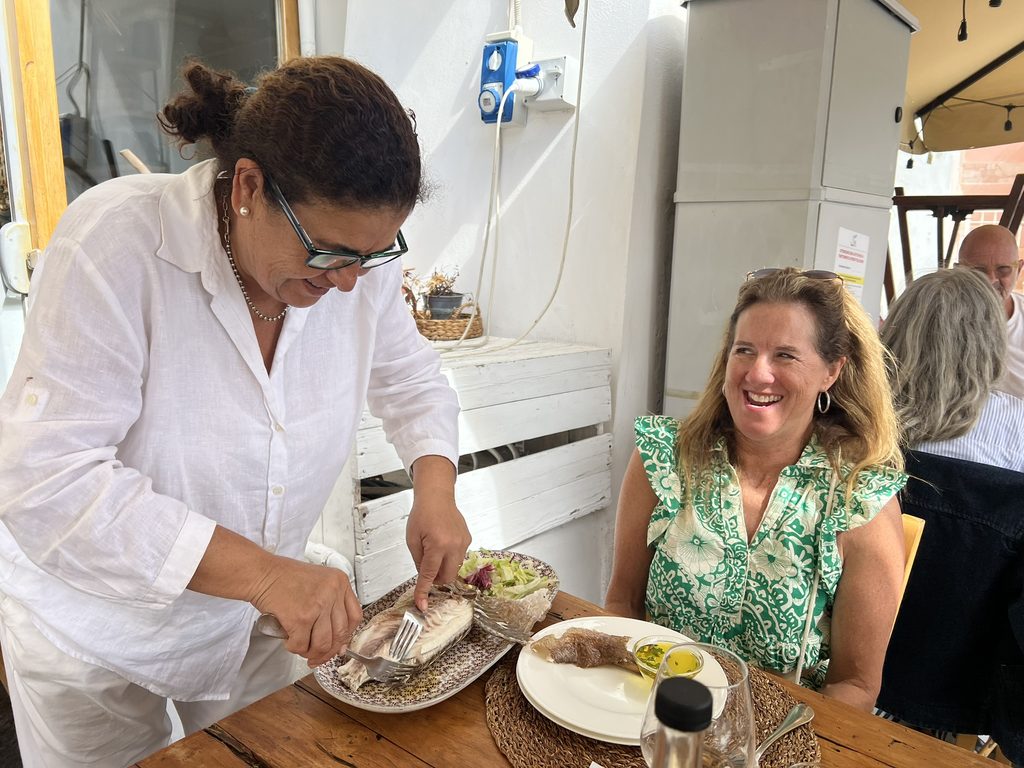
I think she’d meant to say, “It’s easy,” but this was much more fun.
After she’d finished preparing the fish, she poured a delicate dressing of olive oil and fresh herbs over it and served us.
It was moist and tender. I sighed after a bite. We ate every last little piece of fish. We used the rest of the bread to wipe the oval ceramic platter dry.
At the end, I couldn’t help myself and asked Celeste for a selfie. She posed with me and then gave me a big hug.
Comments are closed